
Black Horse Racing Header

“If you’re not moving, you’re standing  still.”


Steve Trafton

Trek from Washington DC to Pittsburgh

Birch lined C and O Canal Birch lined C and O Canal near mile 143


A short distance further on is Lock #58 (milepost 144). This is the first of a series of locks which were partially built of wood with rubble stone that filled in the wooden sidewalls of the lock.

image055

At Lock #58 the path led on around Devils Alley Bend and past Lock #59 (milepost 146.5 and then back under another Western Maryland Railroad trestle (milepost 147.1). After crossing over the towpath at this point railroad tracks pass through the Stickpole Tunnel before emerging again at milepost 151.2. Mile 153.3; in August 1838 the canal contractor began quarrying stone in nearby Twigg Hollow and brought it down to the lock construction sites on a horse drawn railway.

image057

At milepost 154.5 the towpath moved inland and rises in three locks to enter the Paw Paw Tunnel. Lock #63 1/3. The canal company found it needed one less lock than it had planned, so it covered up the mistake by numbering the first two locks with fractions. Apparently the contracts had already been awarded for the locks upstream and there was too much paperwork in place for the canal company to renumber the locks from this point. Milepost 154.6 Lock #64 2/3. This was the site of the murder of the lockkeeper in the late 1890s. The lockkeeper in the isolated stretch of the canal was well known to the passing boatmen for his collection of rare coins. The keeper’s home was burned down one night, and his body was found inside, marked with burns and the skull crushed. Several months later some boatmen in Shanty Town in Cumberland noticed a stranger buying drinks with one of the rare coins. The captured the man and found more of the coins in the pocket, nearly killed him on the spot. In the ensuing trial, several Cumberland businessmen testified that they had also received some of the distinctive coins from the man, who was convicted and hanged for his crime.

At milepost 155 a boardwalk carries the towpath through the shale porge approaching the tunnel. The boardwalk continues through the tunnel with some the original boards still in place! The “North” portal of the Paw Paw Tunnel is at milepost 155.2. The tunnel actually runs approximately north to south The long ‘cut” leading to the tunnel was another difficult part of building the tunnel. This is the “Slickensllide” area where water freezes in the steeply sloping layers of whale, breaking off large chucks of rock and sending them down into the canal. To overcome this problem the engineers this use of iron bars inserted in bore holes to help stabilize the surface rock.

The 3118 foot tunnel is one of most interesting features of the C and O Canal, built as a bypass to some very difficult terrain along the Potomac in the Paw Paw Bends. Here the river makes a series of large loops; the tunnel route cutting across one large double loop takes 1 mile whereas the riverside route takes 6. The tunnel is only a single boat wide and so in order to prevent a traffic jam of boats going opposite directions in the center of the tunnel a boy was sent ahead to post a lantern at the other end, so that an oncoming boat would know that the tunnel was already occupied and would wait its turn. From time to time canal boats, with their stubborn captains, would enter the tunnel at the same time and meet in the middle. On one memorable occasion, neither side would back down for several days. As a result boats piled up for miles on either end. Finally the section superintendent went to nearby farms and bought all the green corn he could find and then at the upwind end of the tunnel he built a roaring fire and threw on green cornstalks. The dispute was quickly settle as the tunnel filled with smoke and the tunnel cleared.

I cleared the “South” portal (milepost 155.8) and rested in the shade, enjoying a sandwich Steve and Mary had packed for me that morning.

At milepost 156.4 the Western Maryland Railroad once again crossed over the towpath. Further on I passed Lock #67 (milepost 161.7). Milepost 162.4; the Town Creek Aqueduct, a single span aqueduct completed in 1850. Town Creek was considered to be a reliable source of water and a saw and gristmill operated here in the 1820s. Today the canal has been dammed up at this point, and is watered up to Oldtown by local fishermen.

image065

I continued on the towpath to milepost 164.8, Potomac Forks. Here the Potomac splits into the north fork and the south fork. The canal continues on along the north fork. Lock #68 is also at this site. The lock channel has boarded up, and the canal water flows around through the bypass flume. The whitewashed frame lock house is of later construction and more elaborate than the spartan houses originally built for the keepers. The lock house and the lily pads in the canal make this one of the more memorable locks.

Milepost 166.7; the towpath passes by Lock #69 and 70 and comes to Oldtown. This marked the end of the long hard day, 25.8 miles. Steve met me here and we drove back to Little Orleans for another great meal and a restful night before the final leg of the trip to Cumberland.

The next morning Steve and I drove to Cumberland where I left my rental car at the towpath terminus before we returned to Oldtown. I invited Steve and Mary to join me in Cumberland that evening for a celebratory dinner as a thank you for all their help.

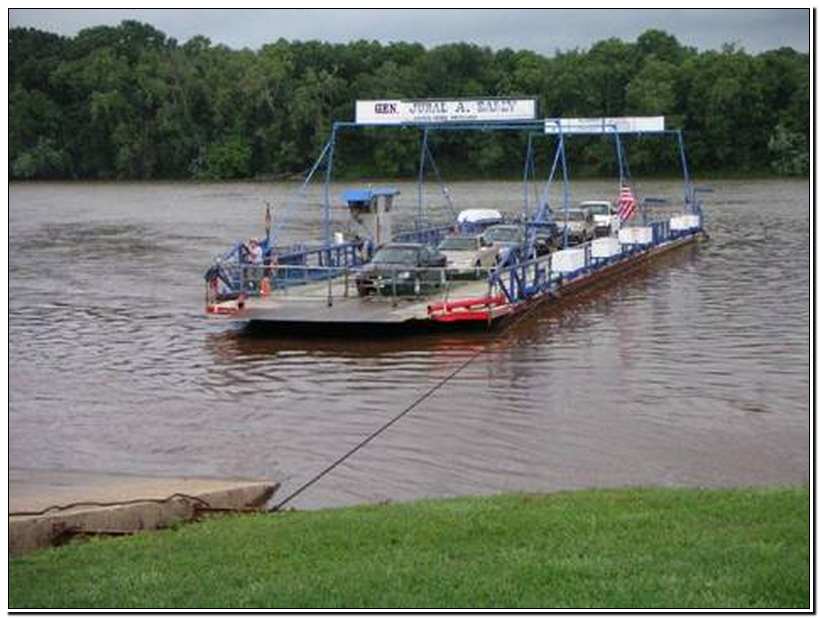
After bidding Steve good day I started off down the path. I almost immediately passed by Lock #71 (milepost 167) and at milepost 169.1 came to Pigman’s Ferry Campsite. From here the trail followed the river and the Western Maryland Railroad grade to the Spring Gap Recreation Area (milepost 173.3). It was here the George Washington crossed over to Western Virginia when he was just 16 and accompanying a surveying expedition in 1748. Then bridge over the canal was built in 1859 and burned by Confederate raiders on February 2, 1864, during General Jubal Early’s winter foray into the mountains west of the Shenandoah Valley. Operating with Early on this mission were cavalry under the command of Elijah White and McNeill’s Partisan Rangers.

image067

At milepost 174.4 I reached “The Narrows,” where the canal squeezes between the river and Irons Mountain to enter the valley extending up to Cumberland. At milepost 175.7 I came to Lock #75, the last lift lock on the canal.

Pages: « Previous 1 2 3 4 5 6 Next »